April 1,2011
smarter them Einstein
HAMILTON COUNTY, Ind. - What were you doing when you were 12 years old?
Playing video
? Dreaming of winning a Heisman Trophy? Maybe starting to show a little interest in a significant other?
It’s probably safe to say you weren’t taking on Albert Einstein’s Theory of Relativity.
Well, that’s what 12-year-old Jake Barnet, of Hamilton County, Indiana,
is proposing. Jake has become somewhat of an Internet star thanks to
YouTube videos of his ideas about mathematics and physics, which his mom
shoots and posts online.
In one of the most recent videos, Jake discusses Einstein’s Theory of
relativity, explaining in the description why he might have a different
theory:
“My initial perception from this is that light does have mass,” Jake
writes. “Obviously, energy coming out of a system where light is emitted
could not be conserved otherwise. You can correct me later if I change
my mind, but for the moment this is my perception.”
Jake has a mild form of autism, according to Time.com, and he also has
an I.Q. of 170. He taught himself calculus, algebra and geometry in two
weeks and graduated high school at the age of eight. He has been
attending college-level physics
since then.
March 31,2011
|
2036 Asteroid Apocalypse

An image provided by the German
Aerospace Center DLR on Saturday, Sept. 6, 2008 shows a two photos combo
of the asteroid Steins, on Friday, Sept. 5, 2008. (AP Photo/ESA)
(Newser) – If that whole end-of-the-world
thing doesn't work out next year, maybe the jig is up in 2036:
Scientists are now saying that's the year an asteroid previously thought
harmless (after having been deemed catastrophic before that) might just
plow into the Earth.
A few Russian scientists are warning that
Apophis, which is expected to come within five Earth radii of our
planet, will hit a gravitational "keyhole" that will pull it onto a
collision course, the Christian Science Monitor reports. Apophis—which
the Russian scientists estimate will hit our planet on April 13,
2036—has a diameter of two football fields, so a collision could be
catastrophic. But NASA says the chance of an impact is slight.
"Technically, they’re correct, there is a chance in 2036 that Apophis
will hit Earth," said Donald Yeomans, head of NASA’s Near-Earth Object
Program Office. But that chance is just one in 250,000, he says.
March 31,2011
|
Black hole confirmed in Milky Way
 |
| Core of the Milky Way galaxy, taken with Nasa's Spitzer space telescope |
They tracked the movement of 28 stars circling the centre of the Milky Way, using two telescopes in Chile.
The black hole, said to be 27,000 light years from Earth, is four
million times bigger than the Sun, according to the paper in The
Astrophysical Journal.
Black holes are objects whose gravity is so great that nothing - including light - can escape them.
According to Dr Robert Massey, of the Royal Astronomical Society (RAS),
the results suggest that galaxies form around giant black holes in the
way that a pearl forms around grit.
'The black pearl'
Dr Massey said: "Although we think of black holes as somehow
threatening, in the sense that if you get too close to one you are in
trouble, they may have had a role in helping galaxies to form - not just
our own, but all galaxies.
"They had a role in bringing matter together and if you had a high
enough density of matter then you have the conditions in which stars
could form.
"Thus the first generation of stars and galaxies could have come into existence".
The researchers from the Max Planck Institute for Extraterrestrial
Physics in Germany said the black hole was 27,000 light years, or 158
thousand, million, million miles from the Earth.
"Undoubtedly the most spectacular aspect of our 16-year study, is that
it has delivered what is now considered to be the best empirical
evidence that super-massive black holes do really exist," said Professor
Reinhard Genzel, head of the research team.
"The stellar orbits in the galactic centre show that the central mass
concentration of four million solar masses must be a black hole, beyond
any reasonable doubt."
Observations were made using the 3.5m New Technology Telescope and the
8.2m Very Large Telescope (VLT) in Chile. Both are operated by the
European Southern Observatory (Eso).
April 2,2011
Japan nuclear struggle focuses on cracked reactor pit
TOKYO (Reuters) – Japanese officials grappling on Sunday to end the
world's worst nuclear crisis since Chernobyl were focusing on a crack in
a concrete pit that was leaking radiation into the ocean from a
crippled reactor.
Tokyo Electric Power Co (TEPCO) said it had found a crack in the pit at
its No.2 reactor in Fukushima, generating readings 1,000 millisieverts
of radiation per hour in the air inside the pit.
"With radiation levels rising in the seawater near the plant, we have
been trying to confirm the reason why, and in that context, this could
be one source," said Hidehiko Nishiyama, deputy head of the Nuclear and
Industrial Safety Agency (NISA), said on Saturday.
He cautioned, however: "We can't really say for certain until we've studied the results."
Leakage did not stop even after concrete was poured into the pit, and
Tokyo Electric is now planning to use water-absorbent polymer to prevent
contaminated water from leaking out into the sea.
Officials from the utility said checks of the other five reactors found no cracks.
Nishiyama said that to cool the damaged reactor, NISA was looking at
alternatives to pumping in water, including an improvised air
conditioning system, spraying the reactor fuel rods with vaporized water
or using the plant's cleaning system.
PM UNDER PRESSURE
As the disaster that has left more than 27,000 dead or missing dragged
into a fourth week, Prime Minister Naoto Kan toured devastated coastal
towns in northern Japan on Saturday, offering refugees government
support for rebuilding homes and livelihoods.
"It will be kind of a long battle, but the government will be working
hard together with you until the end," Kyodo news agency quoted him as
telling people in a shelter in Rikuzentakata, a fishing port flattened
by the tsunami which struck on March 11 after a massive earthquake.
Unpopular and under pressure to quit or call a snap poll before the
disaster, Kan has been criticized for his management of the humanitarian
and nuclear crisis. Some tsunami survivors said he came to visit them
too late.
Kan also entered the 20-km (12-mile) evacuation zone and visited
J-village just inside the zone, a sports facility serving as the
headquarters for emergency teams trying to cool the six-reactor
Fukushima Daiichi plant.
Operators of the plant are no closer to regaining control of damaged
reactors, as fuel rods remain overheated and high levels of radiation
are flowing into the sea.
Japan is facing a damages bill which may top $300 billion -- the world's biggest from a natural disaster.
The International Monetary Fund (IMF) said on Friday the Japanese
economy would take a short-term hit and it could not rule out further
intervention for the yen.
The consequences for the world's third largest economy have already seen
manufacturing slump to a two-year low. Power outages and quake damage
have hit supply chains and production.
Hundreds of thousands remain homeless, sheltering in evacuation centers, as the death toll from the disaster rises.
Thousands of Japanese and U.S. soldiers on Saturday conducted a search
for bodies using dozens of ships and helicopters to sweep across land
still under water along the northeast coast. The teams hope when a large
spring tide recedes it will make it easier to spot bodies.
Radiation 4,000 times the legal limit has been detected in seawater near
the Daiichi plant and a floating tanker was to be towed to Fukushima to
store contaminated seawater. But until the plant's internal cooling
system is reconnected radiation will flow from the plant.
April 2,2011
hole fond in a plane
PHOENIX – A "gunshot-like sound" woke Brenda Reese as her Southwest
Airlines flight cruised at 36,000 feet. Looking up, she could see the
sky through a hole torn in the cabin roof.
The Boeing 737 lost cabin pressure after the hole developed Friday,
prompting frightened passengers to grope for oxygen masks as the plane
made a terrifying but controlled descent.
One passenger called it "pandemonium." Another watched as a flight
attendant and another passenger passed out, apparently for lack of
oxygen, their heads striking seats in front of them.
Officials said Flight 812 lost pressure because of a fuselage rupture.
Federal Aviation Administration spokesman Ian Gregor said the pilot made
a "controlled descent from 36,000 feet to 11,000 feet altitude."
His safe emergency landing at a military base in Yuma, about 150 miles
southwest of Phoenix, drew applause from relieved passengers.
No serious injuries were reported among the 118 people aboard although a
flight attendant was slightly hurt, according to Southwest officials.
The cause of the hole was not immediately known. The FBI called it a
"mechanical failure," not an act of terror or other foul play.
The plane is a 15-year-old Boeing 737-300. Southwest officials said they
would pull about 80 similar planes out of service for inspections of
the fuselage, forcing the airline to plan to cancel roughly 300 flights
Saturday.
Southwest operates about 170 of the 737-300s in its fleet of about 540
planes, but it replaced the aluminum skin on many of the 300s in recent
years, spokeswoman Linda Rutherford said. The roughly 80 planes being
grounded have not had their skin replaced, she said.
"Obviously we're dealing with a skin issue, and we believe that these 80
airplanes are covered by a set of (federal safety rules) that make them
candidates to do this additional inspection that Boeing is devising for
us," Rutherford said.
Southwest officials said the Arizona plane had undergone all inspections
required by the FAA, but they did not immediately provide the date of
the last inspection.
The 737-300 is the oldest plane in Southwest's fleet, and the company is
retiring 300s as it take deliveries of new Boeing 737-700s and,
beginning next year, 737-800s. But the process of replacing all the 300s
could take years.
Reese said the plane had just left Phoenix Sky Harbor International
Airport for Sacramento, Calif., when the "gunshot-like sound" woke her
up. Oxygen masks dropped as the plane dove.
Seated one row from the rupture, Don Nelson said it took about four
noisy minutes for the plane to dip to less than 10,000 feet. "You could
tell there was an oxygen deficiency," he said.
"People were dropping," said Christine Ziegler, a 44-year-old project
manager from Sacramento who watched as the crew member and a passenger
nearby fainted. Nelson and Ziegler spoke after a substitute flight took
them on to Sacramento.
Reese described the hole as "at the top of the plane, right up above where you store your luggage."
"The panel's not completely off," she told The Associated Press. "It's
like ripped down, but you can see completely outside... When you look up
through the panel, you can see the sky."
Cellphone photographs provided by Reese showed a panel hanging open in a
section above the plane's middle aisle, with a hole of about six feet
long.
The National Transportation Safety Board said an "in-flight fuselage
rupture" led to the drop in cabin pressure aboard the plane.
A similar incident happened in July 2009 when a football-sized hole
opened up in flight in the fuselage of another Southwest 737,
depressurizing the cabin. The plane made an emergency landing in
Charleston, W.Va. It was later determined that the hole was caused by
metal fatigue.
Afterward, Southwest and the FAA reached an agreement specifying actions
the airline would take to prevent another episode, said John Goglia, a
former National Transportation Safety Board member and an expert on
airline maintenance. The details of that agreement are considered
proprietary and haven't been made public, he said.
The latest incident "certainly makes me think there is something wrong
with the maintenance system at Southwest and it makes me think there is
something wrong with the (FAA) principal maintenance inspector down
there that after that big event they weren't watching this more
closely," Goglia said in an interview.
There was "never any danger that the plane would fall out of the sky,"
Goglia said. "However, anybody on that airplane with any sort of
respiratory problems certainly was at risk."
Four months before that emergency landing, the Dallas-based airline had
agreed to pay $7.5 million to settle charges that it operated planes
that had missed required safety inspections for cracks in the fuselage.
The airline, which flies Boeing 737s, inspected nearly 200 of its planes
back then, found no cracks and put them back in the sky.
Julie O'Donnell, an aviation safety spokeswoman for Seattle-based Boeing
Commercial Airplanes, confirmed "a hole in the fuselage and a
depressurization event" in the latest incident but declined to speculate
on what caused it.
Reese said passengers applauded the pilot after he emerged from the
cockpit following the emergency landing at Yuma Marine Corps Air
Station/International Airport.
"It was unreal. Everybody was like they were high school chums," Ziegler
said, describing a scene in which passengers comforted and hugged each
other after the plane was on the ground.
"I fly a lot. This is the first time I ever had something like this
happen," said Reese, a 37-year-old single mother of three who is vice
president for a clinical research organization. "I just want to get home
and hold my kids."
An FAA inspector from Phoenix and an NTSB crew were expected to be in Yuma on Saturday to investigate.
Holes in aircraft can be caused by metal fatigue or lightning. The
National Weather Service said the weather was clear from the Phoenix
area to the California border on Friday afternoon.
In 1988, cracks caused part of the roof of an Aloha Airlines Boeing 737
to peel open while the jet flew from Hilo to Honolulu. A flight
attendant was sucked out of the plane and plunged to her death, and
dozens of passengers were injured.
Three years ago, an exploding oxygen cylinder ripped a gaping hole the
fuselage of a Qantas Boeing 747-438 carrying 365 people. The plane
descended thousands of feet with the loss of cabin pressure and flew
about 300 miles to Manila, where it made a successful emergen
April 5,2011
Ozone layer faces record loss over Arctic
GENEVA – The depletion of the ozone layer shielding Earth from damaging ultraviolet rays has reached an unprecedented low over the Arctic this spring because of harmful chemicals and a cold winter, the U.N. weather agency said Tuesday.
The Earth's fragile ozone layer in the Arctic region has suffered a loss of about 40 percent from the start of winter until late March, exceeding the previous seasonal loss of about 30 percent, the World Meteorological Organization said.
The Geneva-based agency blamed the loss on a buildup of ozone-eating chemicals once widely used as coolants and fire retardants in a variety of appliances and on very cold temperatures in the stratosphere, the second major layer of the Earth's atmosphere, just above the troposphere.
Arctic ozone conditions vary more than the seasonal ozone "hole" that forms high in the stratosphere near the South Pole each winter and spring, and the temperatures are always warmer than over Antarctica.
Because of changing weather and temperatures some Arctic winters experience almost no ozone loss while others with exceptionally cold stratospheric conditions can occasionally lead to substantial ozone depletion, U.N. scientists say.
This year the Arctic winter was warmer than average at ground level, but colder in the stratosphere than normal Arctic winters. U.N. officials say the latest losses — unprecedented, but not entirely unexpected — were detected in observations from the ground and from balloons and satellites over the Arctic.
Atmospheric scientists who are concerned about global warming focus on the Arctic because that is a region where the effects are expected to be felt first.
Ozone scientists have said that significant Arctic ozone depletion is possible in the case of a cold and stable Arctic stratospheric winter. Ozone losses occur over the polar regions when temperatures drop below -78 degrees Celsius (-108 Fahrenheit), when clouds form in the stratosphere.
Average temperatures in January range from about -40 to 0 C (-40 to 32 F), while average temperatures in July range from about -10 to 10 C (14 to 50 F).
"The Arctic stratosphere continues to be vulnerable to ozone destruction caused by ozone-depleting substances linked to human activities," said WMO secretary-general Michel Jarraud. "The degree of ozone loss experienced in any particular winter depends on the meteorological conditions."
The loss comes despite the U.N. ozone treaty, known as the 1987 Montreal Protocol, which has resulted in cutbacks in ozone-damaging chemicals, such as chlorofluorocarbons, halons and other, that were used in the making of refrigerators, air conditioners, fire extinguishers and even hairspray.
The 196-nation ozone treaty encourages industries to use replacement chemicals less damaging to ozone, the atmospheric layer that helps protect against the sun's most harmful rays.
But because these compounds have long atmospheric lifetimes, it takes decades for their concentrations to subside to pre-1980 levels as was agreed in the Montreal Protocol.
U.N. officials project the ozone layer outside the polar regions will recover to pre-1980 levels sometime between 2030 and 2040.
April 9,2011
Shutdown avoided, White House, Congress cheer deal
WASHINGTON – A last minute budget deal, forged amid bluster and tough
bargaining, averted an embarrassing federal shutdown and cut billions
in spending — the first major test of the divided government voters
ushered in five months ago.
Working late into the evening Friday, congressional
and White House negotiators struck an agreement to pay for government
operations through the end of September while trimming $38.5 billion in
spending. Lawmakers then approved a days-long stopgap measure to keep
the government running while the details of the new spending plan were
written into legislation.
Actual approval of the deal would come in mid-week.
"Today Americans of different beliefs came together
again," President Barack Obama said from the White House Blue Room, a
setting chosen to offer a clear view of the Washington Monument over his
right shoulder.
The agreement — negotiated by the new Republican
speaker of the House, John Boehner, the president and the Senate
Democratic leader, Harry Reid — came as the administration was poised to
shutter federal services, from national parks to tax-season help
centers, and to send furlough notices to hundreds of thousands of
federal workers. It was a prospect that all sides insisted they wanted
to avoid but that at times seemed all but inevitable.
Shortly after midnight, White House budget director
Jacob Lew issued a memo instructing the government's departments and
agencies to continue their normal operations.
Boehner said the agreement came after "a lot of
discussion and a long fight," and he won an ovation from his rank and
file, including the new tea party adherents whose victories last
November shifted control of the House to the GOP.
Reid declared the deal "historic."
April 9,2011
Nazi warplane lying off UK coast is intact
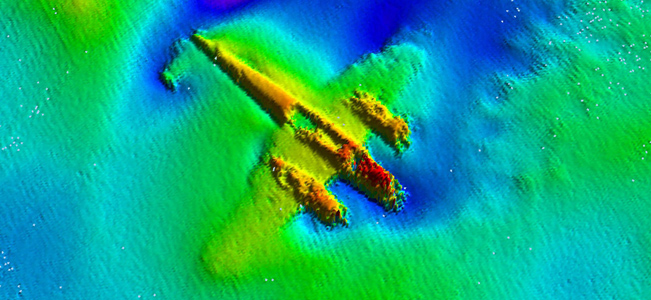
LONDON (Reuters) – A rare World War Two German bomber, shot down over
the English Channel in 1940 and hidden for years by shifting sands at
the bottom of the sea, is so well preserved a British museum wants to
raise it.
The Dornier 17 -- thought to be world's last known example -- was hit as it took part in the Battle of Britain.
It ditched in the sea just off the Kent coast, southeast England, in an area known as the Goodwin Sands.
The plane came to rest upside-down in 50 feet of water and has become
partially visible from time to time as the sands retreated before being
buried again.
Now a high-tech sonar survey undertaken by the Port of London Authority
(PLA) has revealed the aircraft to be in a startling state of
preservation.
Ian Thirsk, from the RAF Museum at Hendon in London, told the BBC he was
"incredulous" when he first heard of its existence and potential
preservation.
"This aircraft is a unique aeroplane and it's linked to an iconic event
in British history, so its importance cannot be over-emphasized,
nationally and internationally," he said.
"It's one of the most significant aeronautical finds of the century."
Known as "the flying pencil," the Dornier 17 was designed as a passenger
plane in 1934 and was later converted for military use as a fast
bomber, difficult to hit and theoretically able to outpace enemy fighter
aircraft.

Reuters/Royal Air Force Museum London/handout
In all, some 1,700 were produced but they struggled in the war with a
limited range and bomb load capability and many were scrapped
afterwards.
Striking high-resolution images appear to show that the Goodwin Sands
plane suffered only minor damage, to its forward cockpit and observation
windows, on impact.
"The bomb bay doors were open, suggesting the crew jettisoned their cargo," said PLA spokesman Martin Garside.
Two of the crew members died on impact, while two others, including the pilot, were taken prisoner and survived the war.
"The fact that it was almost entirely made of aluminum and produced in
one piece may have contributed to its preservation," Garside told
Reuters.
The plane is still vulnerable to the area's notorious shifting sands and
has become the target of recreational divers hoping to salvage
souvenirs.
The RAF museum has launched an appeal to raise funds for the lifting operation.
April 10,2011
America's Meanest Airlines: 2011
By Hamooda Shami
In last place: United Airlines
More from USNews.com
More from Yahoo! Travel
Last year was a good one for the airline industry, with U.S. airlines
churning out the highest profits in more than a decade. With the
exception of American Airlines, every major carrier turned in positive
profits for the year.
In the 2011 Airline Quality Rating (AQR) report released on April 4, quality is up as well.
But that doesn't mean airlines deserve high-fives all around. Soaring
baggage fees, widespread airfare increases and the elimination of free
food on many flights were major factors in improving the bottom line.
Not surprisingly,
customers were not happy in 2010. According to a Business Insider study
conducted last November, which uses data from the American Customer
Satisfaction Index, four of the major U.S. carriers made its list of the
"18 Worst Companies in
America." The year also saw PR nightmares for the industry, including
discrimination against disabled and overweight passengers and the
episode involving a JetBlue flight attendant (the now famous Steven
Slater) hitting his breaking
point. 2011 has already seen a pilot misplace his handgun and a flight
attendant put a baby in an overhead bin -- hardly a good way to start
the year.
Meanest Major Carrier
United
United came in last place among all major airlines on our 2011 Meanest Airlines list with an AQR score of -1.31. United
had the second-highest customer complaint rate (1.64 per 100,000 passengers) of all airlines in 2010, including the regional
carriers.
Worst regional carrier: American Eagle
Meanest Regional Carrier
American Eagle
American Eagle earned last place among all regional airlines on our 2011 Meanest Airlines list with an AQR score of -2.82.
The major contributing factors were that they had the most incidents of mishandled baggage (7.15 reports per 1,000
passengers) and the highest involuntary denied boardings rate (4.02 per 10,000 passengers) in 2010.
Delta has the highest complaint rate
Most Complained About Airline
Delta
Delta had the highest consumer complaint rate (2.00 complaints per 100,000 passengers) of all the carriers surveyed for
the 2011 Airline Quality Rating (AQR) report. Delta placed #5 among major airlines on our 2011 Meanest Airlines list with an
AQR score of -1.22.
Jet Blue: most likely to be unsafe
Most Likely to be Unsafe
JetBlue
With only 17 documented incidents out of approximately 219,000 flights in 2010, the "least safe" major (minimum of 600
flights a day on average) airline is still very safe. Fortunately, commercial air travel in the United States these days is
about as safe as it gets.
Delta, US Airways and Continental all share hefty baggage charges
Most Likely to Overcharge for Bags
Delta / US Airways / Continental
This worst culprit in this category depends on the type of baggage you're checking. Delta, US Airways and Continental all
share a similar fee structure, with some variance.
Domestic Baggage Fees
1st Bag: $25 ($23 if checked online with Delta or Continental)
2nd Bag: $35 ($32 if checked online with Delta or Continental)
3rd Bag: $125 for Delta & US Airways; $100-$200 for Continental
Overweight/Oversized Bags
51-70 lbs: $90 for Delta & US Airways; $200 for Continental
71-100 lbs: $175 for Delta & US Airways; Continental will not accept luggage heavier than 70 lbs as checked baggage
Larger than 62 inches: $175 for Delta & US Airways; $100-$200 for Continental
American Eagle is the most likely to bump you
Most Likely to Bump You
American Eagle
American Eagle had the highest rate of involuntary denied boardings in 2010, with a rate of 4.02 per 10,000 passengers.
American Eagle was the worst overall airline on our 2011 Meanest Airlines list with an AQR score of -2.82.
Comair has the worst on-time rate
Most Likely to be Late
Comair
Comair was the tardiest airline in 2010. With only 73.1 percent of flights arriving on time, the airline had the worst on
-time performance of all of the airlines surveyed for the 2011 Airline Quality Rating (AQR) report. Comair placed #3 among
regional airlines on our 2011 Meanest Airlines list with an AQR score of -1.56.
American Eagle had the most incidents of mishandled baggage in 2010
Most Likely to Mishandle Your Bag
American Eagle
American Eagle had the most incidents of mishandled baggage in 2010, with 7.15 reports per 1,000 passengers. American
Eagle was the worst overall airline on our 2011 Meanest Airlines list with an AQR score of -2.82.
April 13, 2011
Key from the speech: What’s in Obama’s deficit reduction plan?

After largely staying on the sidelines during the
fight over the deficit, President Obama today jumped headfirst into the
fray, laying out a broad framework to reduce the federal budget gap by
$4 trillion over the next 12 years.
In a speech at George Washington University in
Washington, D.C., Obama proposed what he called a "balanced approach," a
mix of spending cuts and tax increases "that puts every kind of
spending on the table, but [...] protects the middle class, our promise
to seniors, and our investments in the future." he said.
The plan contrasts with one released last week by
Rep. Paul Ryan of Wisconsin, the Republican point man on budget issues.
Obama derided Ryan's approach as "less about reducing the deficit than
it is about changing the basic social compact in America."
Here's what Obama called for in his "Framework for Shared Prosperity and Shared Fiscal Responsibility":
- One quarter of the deficit reduction to
be achieved through tax increases, with the rest to come mostly from
spending cuts--a split that the president's liberal base may see as
still too heavily tilted toward spending cuts
- An end to the Bush tax cuts for the 2 percent of Americans making $250,000 or more
- Tax reform aimed at closing loopholes that favor the rich, allowing for a lowering of overall rates, as recommended by the Bowles-Simpson deficit reduction commission
- Cuts of $770 billion by 2023 to non-security discretionary spending, another Bowles-Simpson recommendation
- Cuts of $400 billion to "security spending"--that is, defense--by 2023
- A
rejection of the Ryan budget's approach to Medicare and Medicaid, which
the White House believes would unfairly shift costs to seniors and the
vulnerable while undermining both programs in the long term. Instead,
Obama proposed reforms to reduce the growth of health care spending
(beyond those in the overhaul last year) that would save $480 billion by
2023, and at least an additional trillion in the decade following
- Cuts
to other mandatory programs--the White House listed agricultural
subsidies, the federal pension insurance system, and anti-fraud
measures--worth $360 billion by 2023
- A general effort to "strengthen Social Security for the long haul," without slashing benefits for future generations
- A
"debt failsafe," to kick in by 2014. If long-term deficit projections
aren't looking better by that time, the failsafe would trigger an
across-the-board spending reduction (with exceptions for Social
Security, low-income programs, and Medicare benefits)
- The
creation of a committee chaired by Vice President Joe Biden and
including members of both parties and houses of Congress, to begin
meeting next month in order to "agree on a legislative framework for
comprehensive deficit reduction"
April 13, 2011
Ex-NY mob boss makes history with trial testimony
NEW YORK – A jailed former Mafia boss who once
ordered a payback killing in the infamous "Donnie Brasco" case made
gangland history Tuesday by becoming the highest-ranking member of the
city's five Italian organized crime families to break their sacred vow
of silence and testify against one of their own.
Joseph Massino took the witness stand at the Brooklyn
trial of Vincent "Vinny Gorgeous" Basciano, who served as one of his
captains in the Bonanno crime family. Prosecutors say that Massino
secretly recorded Basciano admitting he ordered a hit on an associate
who ran afoul of the secretive Bonannos.
"You will hear the defendant did not tolerate being
disrespected or disobeyed and that the penalty for both was death,"
Assistant U.S. Attorney Nicole Argentieri said in opening statements.
Moments after being sworn in, Massino pointed across
the courtroom and identified Basciano — "the guy sitting in the gray
suit" — as the crime family's former acting boss. The defendant stared
back at the government's star witness, steadily chewing on a piece of
gum.
In clipped tones, Massino gave the anonymous jury a colorful tutorial on the Mafia.
By cooperating, he explained, he was violating a
sacred oath he took during a 1977 induction ceremony to protect the
secret society. It was understood, he said, that "once a bullet leaves
that gun, you never talk about it."
He testified that when he took control of the family
he gave strict orders to never utter his name — a precaution against FBI
surveillance. Instead, his soldiers touched their ears to refer to him,
earning him the nickname "The Ear."
Asked about his duties as boss, he replied, "Murder.
... Making captains. Breaking captains" — lingo for promoting and
demoting capos. He said he also had to assess talent.
"It takes all kinds of meat to make a good sauce,"
said Massino, the one-time proprietor of a Queens restaurant called
CasaBlanca. "Some people, they kill. Some people, they earn, they can't
kill."
Massino, 68, broke ranks and began talking with
investigators after his 2004 conviction for orchestrating a
quarter-century's worth of murder, racketeering and other crimes as he
rose through the ranks of the Bonannos. The bloodshed included the
shotgun slayings of three rival captains and the execution of a mobster
who vouched for FBI undercover Brasco in the 1980s. Brasco's story
became a movie starring Johnny Depp and Al Pacino.
While imprisoned together in 2005, the former Bonanno boss agreed to wear a wire and betray Basciano.
The understudy "told me that he killed him," Massino
said in recounting a conversation about the 2004 slaying charged in the
current case. "He said (the victim) was a scumbag, a rat, a
troublemaker, a bad kid."
In his opening statement, defense attorney George
Goltzer told jurors that Basciano took credit for the coldblooded murder
to protect the real killer — a friend in the Bonannos who acted without
proper permission — "from the wrath of Joseph Massino." The lawyer
described Massino and other turncoats slated to testify for the
government as deceitful opportunists.
"The United States government needs to make deals with the devil. ... You don't have to accept what they say," Goltzer said.
Prosecutors say Basciano, the one-time owner of the
Hello Gorgeous beauty salon, rose to his leadership role after a series
of Bonanno defections and successful prosecutions in the 2000s decimated
its leadership.
The 50-year-old defendant, known for his explosive
temper, could face the death penalty if convicted of racketeering,
murder and other charges. He already is serving a life term for a
conviction in a separate case in 2007.
Massino is serving two consecutive life terms for
eight murders. He testified his cooperation spared his wife from
prosecution, allowed her to keep their home and gave him a shot at a
reduced sentence.
He said he hoped "one day maybe I'll see a little light at the end of the tunnel."
And what about Donnie Brasco?
Massino said he had never met the real-life undercover. Asked whether
the movie was accurate, he started to move his hand in a dismissive way
before the judge cut him off.
"Jurors, disregard this," the judge instructed while making the same motion.